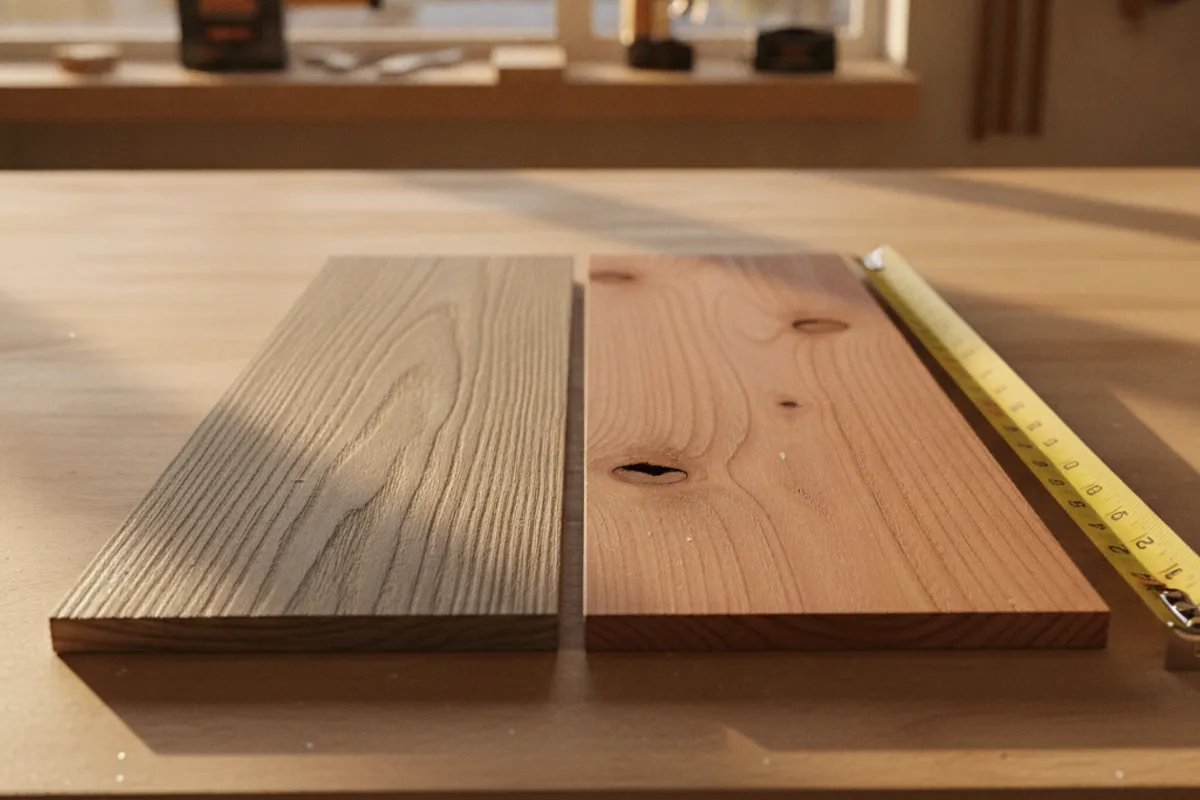
Two fundamentally different decks
Composite and wood are not just material choices - they represent different philosophies about what you want from a deck over 20 years. Wood is a natural product that ages, moves, and requires regular maintenance. Composite is an engineered product designed to stay stable, resist moisture, and shed almost all upkeep. Which one is right depends on where your home sits in San Diego County and how much time you want to spend on the deck versus relaxing on it.
Wood decking: what you’re actually buying
Wood decking in San Diego comes in three real options for residential work: pressure-treated pine, redwood, and cedar.
Pressure-treated pine is the baseline. It’s the least expensive wood option and holds up structurally because the treatment process drives preservatives deep into the fiber. The visual quality is utilitarian - it’s a workmanlike board that grays over time if left unsealed, or holds a semi-transparent stain reasonably well. Most San Diego homeowners who choose pressure-treated are optimizing for budget. It works. It’s not beautiful.
Redwood is the California standard for a reason. The heartwood is naturally resistant to moisture and insects without chemical treatment. A redwood deck in Encinitas or Pacific Beach weathers gracefully when maintained - the color stays richer than pine, and it doesn’t require the same annual coat of sealer to stay intact. It costs 30-60% more than pressure-treated pine per board foot, but the substrate lasts longer and looks better doing it.
Cedar falls between pine and redwood in cost and performance. Good quality cedar holds stain better than pine and has natural oil content that resists warping. It’s less available in Southern California than redwood, so pricing and availability vary.
Wood maintenance reality: any wood deck in San Diego needs cleaning and resealing every 1-3 years depending on sun exposure and proximity to the coast. A south-facing deck in Poway getting full sun will bleach and crack faster than a shaded deck in Del Mar. The maintenance is not complicated, but it’s real, and if you skip it for a few cycles, you’re looking at board replacement.
For the full material comparison including structural framing options, see the deck materials guide.
Composite decking: what you’re actually buying
Composite decking is made from a combination of wood fiber and plastic, capped with a protective outer layer in most modern products. The category has improved enormously in the last decade - current Trex, TimberTech, and Fiberon products bear little resemblance to the generation-one composites that faded, stained, and felt plasticky underfoot.
The real advantages in San Diego:
Composite boards don’t absorb moisture, which matters in coastal communities from Carlsbad down through Coronado where the marine layer rolls in most summer mornings. They won’t warp, cup, or crack from the moisture cycles that stress wood. They won’t splinter, which matters if you have kids or dogs using the deck barefoot.
Maintenance is close to zero - an annual wash with a garden hose and mild soap keeps them clean. No sealing, no staining, no annual projects.
Composite also holds its appearance over time. A quality composite deck in La Jolla or Point Loma in 15 years looks essentially the same as it did at installation. Wood doesn’t work that way.
The real tradeoffs:
Composite gets hotter than wood in direct sun. A dark composite board on a west-facing deck in Santee at 2pm in August will be hot to the touch in ways that comparable cedar boards won’t be. Lighter colors help. This is a real consideration for barefoot deck use.
Upfront cost is higher - typically 40-80% more than wood for comparable board square footage, before accounting for the long-term maintenance savings.
Cost comparison over 20 years
Initial material costs for decking boards (not including framing, which is pressure-treated lumber regardless):
- Pressure-treated pine decking: $3-$6 per linear foot
- Redwood decking: $5-$10 per linear foot
- Cedar decking: $4-$8 per linear foot
- Mid-range composite (Trex Enhance, Fiberon Pro): $8-$14 per linear foot
- Premium composite (Trex Transcend, TimberTech Azek): $14-$22 per linear foot
When you factor in maintenance costs over 20 years - staining, sealing, board replacement - composite often comes out within $2,000-$6,000 of a comparable wood deck on a 300 sq ft project, and sometimes cheaper. The math shifts the longer you own the home.
How San Diego’s climate affects the decision
San Diego’s climate is not uniform. The choice that makes most sense in Del Mar is not the same one that makes sense in Alpine.
Coastal areas (Oceanside, Carlsbad, Encinitas, Cardiff, Del Mar, La Jolla, Ocean Beach, Coronado): The daily marine layer and salt air stress wood more than most people expect. Composite performs especially well here because the moisture resistance is doing real work, not just theoretical work. For a deck two blocks from the water in Carlsbad, composite is a strong call.
Central inland (Kearny Mesa, Mission Valley, Santee, La Mesa, El Cajon): Temperature swings are bigger here and less marine influence. Both materials work. Wood costs less upfront. Composite’s heat retention is most noticeable in these inland areas with high summer temps.
East county (Alpine, Descanso, Jamul): Fire zone regulations in many of these communities limit material choices. Some composite products carry fire-resistance ratings that matter in these jurisdictions. See the fire-zone decking materials guide for the specific requirements.
North County Inland (Escondido, San Marcos, Ramona, Valley Center): Heat is the defining factor. All materials work here. Composite heat retention should factor into color selection.
The honest summary
Choose wood if you want a lower upfront cost and you’re willing to do maintenance every 1-3 years. Pressure-treated is the budget choice. Redwood is the quality wood choice for San Diego.
Choose composite if you want low maintenance, a consistent appearance over time, and you’re planning to own the home for 10+ years. The upfront premium is real, but so is the time you won’t spend refinishing boards.
For most San Diego homeowners planning a deck they’ll use heavily and own for a long time, composite is the direction the conversation tends to go. The maintenance savings compound and the moisture resistance is meaningful in this climate.
Call (858) 400-4918 to connect with a local deck crew that can walk through the right material for your yard, your neighborhood, and your budget.
Is composite or wood decking cheaper in San Diego?
Wood is cheaper upfront - pressure-treated pine runs about half the material cost of mid-range composite. Over 15-20 years with maintenance factored in, the gap narrows significantly and composite sometimes comes out ahead.
How long do composite decks last in San Diego?
Quality composite decks from Trex, TimberTech, or Fiberon carry 25-30 year warranties on fade and stain, and the structural warranty on the boards themselves is typically 25 years. Real-world performance in San Diego’s climate matches those claims well.
Does wood decking hold up in the coastal salt air?
With proper sealing and maintenance, yes. Redwood holds up better than pine near the coast because of its natural oils. Untreated or poorly maintained wood boards near the water will deteriorate faster. Composite has a meaningful advantage in coastal locations where maintenance is harder to stay on top of.